
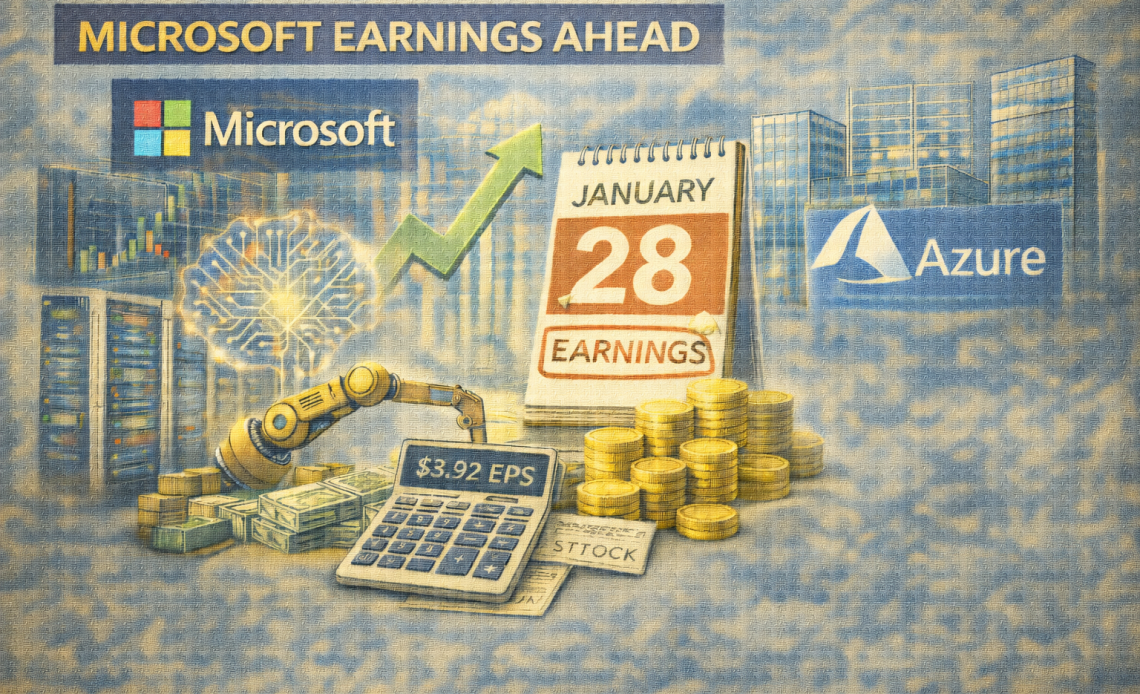
Microsoft is set to report its fiscal second-quarter 2026 earnings on January 28, after market close, with investors closely watching whether strong cloud growth can offset rising costs tied to artificial intelligence investments.
According to analyst expectations compiled by StockStory, Microsoft is expected to post revenue of $80.32 billion for the quarter, representing year-on-year growth of 15.3%.
That would mark an acceleration from the 12.3% growth recorded in the same quarter last year.
Adjusted earnings are forecast at $3.92 per share.
Azure strength underpins revenue expectations
According to Visible Alpha consensus data, expectations for Microsoft’s total fiscal second-quarter revenue have remained largely unchanged since late July 2025, reflecting confidence in the company’s core businesses.
A key driver remains Azure, particularly the newer Azure AI Services segment.
Revenue for Azure AI Services is projected to reach $23.57 billion in fiscal year 2026, up from $18.80 billion in January 2025.
Expectations for this segment’s fiscal second-quarter revenue have risen by more than 20% since July and nearly 25% since January 2025, underscoring optimism around demand for AI-enabled cloud infrastructure.
Microsoft’s broader cloud business continues to anchor its growth outlook.
In its previous earnings report, the company guided for 37% growth in revenue at constant currency from Azure infrastructure and other cloud services for the current period, down slightly from 39% in the September quarter.
Analysts at Evercore ISI said after attending a Microsoft AI Tour event in New York that Azure continues to enjoy a “healthy competitive position.”
Rising capex and margin concerns
While revenue expectations remain resilient, Microsoft’s profitability outlook is facing increased scrutiny as capital spending ramps up.
Consensus projections indicate that the company’s capital expenditures are expected to more than double from $44.5 billion in fiscal year 2024 to $97.7 billion in fiscal year 2026, said a S&P Global report.
Analysts polled by FactSet expect capex to reach $98.8 billion in the current fiscal year, which ends in June, and to rise further over the next two years.
Visible Alpha estimates put fiscal second-quarter capital expenditures and finance leases at $36.25 billion, up 60% year over year.
The stock slid in October after Microsoft raised its spending guidance.
Chief Financial Officer Amy Hood said at the time that capex growth in 2026 would increase from 2025 levels, reversing earlier expectations of a slowdown.
In October, the company also guided for operating margins to be flat year over year, while analysts polled by Visible Alpha expect operating margins to narrow to 67%, the lowest level in three years.
Microsoft has emphasized the need to balance cost discipline as it expands data center capacity to meet AI demand and support Azure growth.
Stock performance and AI adoption questions
Microsoft shares have struggled to gain traction despite sustained cloud growth.
The stock is down 17.8% since its last earnings release and up 6.9% since January 2025, lagging the S&P 500’s 13.8% return.
The consensus forward price-to-earnings multiple for 2025 has declined to 24 times, from 31 times in July.
Investor sentiment toward AI-linked megacaps has cooled in recent months.
“With more investors expecting an AI bubble burst, investing in the mega-cap technology companies may hold substantially greater risk given their market capitalization dominance and share of the cloud computing market,” said Michael Del Monte, an analyst at Seeking Alpha.
Another focus for investors is enterprise adoption of Microsoft’s AI software, particularly the Microsoft 365 Copilot add-on.
KeyBanc analysts raised concerns in a January note, writing: “We heard from one partner that over half of organizations are licensing only up to 10% of the M365 user base, while just under 25% of these organizations are licensing Copilot for up to 25% of the user base.”
As Microsoft prepares to report earnings, markets will be looking for clarity on whether Azure growth, AI partnerships, and enterprise adoption can translate into renewed stock outperformance amid rising investment demands.
The post Microsoft Q2 results: Can Azure growth match rising AI spending appeared first on Invezz