
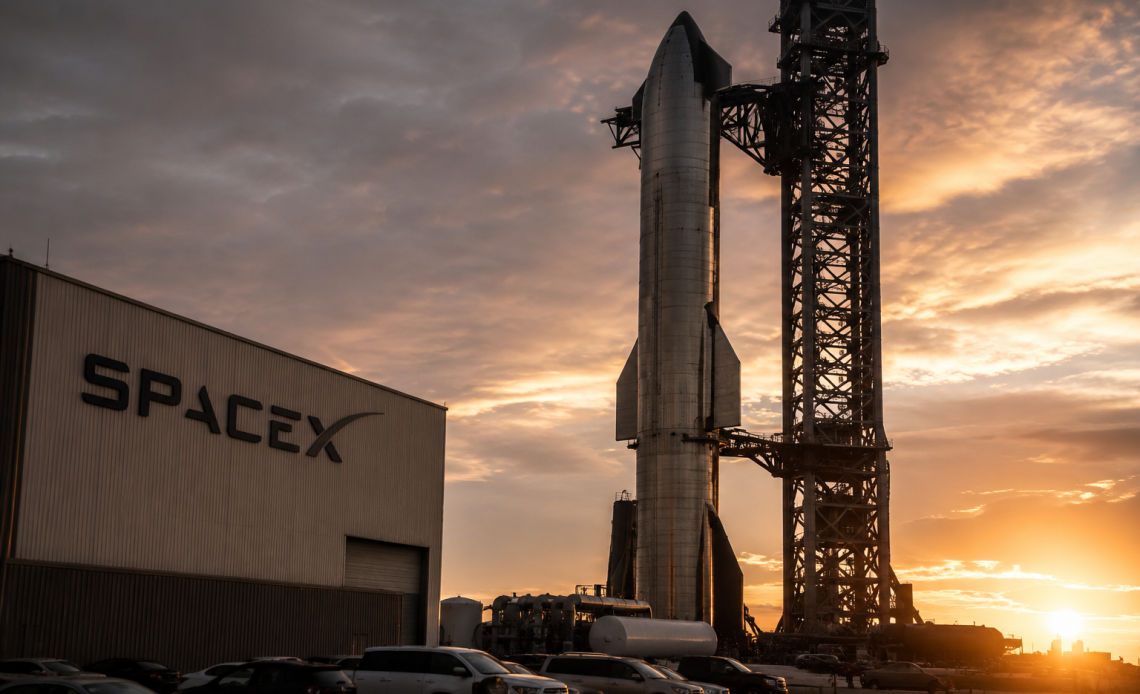
SpaceX is preparing for the kind of stock-market debut Wall Street rarely gets to see: a planned $75 billion raise, a June 12 Nasdaq listing, and a target valuation of $1.75 trillion.
It is the sort of number that turns an IPO into a spectacle, but just as the roadshow begins, Morningstar has put a far colder figure on the table.
Its estimate of SpaceX’s fair value is $780 billion, leaving a valuation gap of nearly $970 billion.
SpaceX IPO: A trillion-dollar disconnect
The clash is simple enough to understand.
SpaceX wants public investors to value the company at $1.75 trillion. Morningstar says it is worth $780 billion.
The difference is bigger than the market value of many of the world’s largest public companies.
That $970 billion gap is what makes the research note so striking as this is not a modest disagreement over a premium.
It is an independent research firm saying the market may be paying almost twice what the business is worth today.
The contrast looks even sharper because private-market enthusiasm has already been intense.
SpaceX was last valued at $1.5 trillion on secondary trading platform Forge Global.
The IPO target would take that figure even higher, despite the company still asking investors to underwrite a long list of future technologies.
Morningstar equity analyst Nicolas Owens put the concern plainly.
“We think the company has been significantly overvalued and investors will have opportunities to buy the stock at more attractive levels after the IPO.”
That does not mean Morningstar is calling SpaceX a weak company. It means the firm is separating a great business from a great price.
Also read: 5 things to know before buying SpaceX IPO
Three businesses, three question marks
Morningstar’s caution comes from how SpaceX is being valued across its three big pillars.
The first is the core business: launches and Starlink. This is the part investors understand best.
SpaceX has transformed launch economics with reusable rockets, while Starlink has become the company’s most visible consumer and connectivity business.
Owens’ model values the launch and Starlink operations at about $611 billion, which is enormous by any normal standard.
But even there, Morningstar sees limits. Starlink still faces technological hurdles, including satellite capacity, network performance, spectrum rules and competition in broadband markets.
The second pillar is artificial intelligence, including xAI and Grok. That is where the story becomes more speculative.
SpaceX has tied part of its future pitch to machine-learning infrastructure and Musk’s broader technology ecosystem.
Morningstar is not dismissing the opportunity entirely, as it assigns about $170 billion to probability-weighted outcomes tied to the AI business.
The caution is that the economics are still unclear. OpenAI, Anthropic and other labs are already fighting for talent, customers, computing power and capital.
Owens was blunt on that point: “We don’t see Grok as one of the leading AI labs today.”
The third pillar is the most futuristic: orbital data centres. The idea is bold, and it fits Musk’s reputation for making investors look far ahead.
But for Morningstar, that is exactly the problem. Space-based computing is still unproven at commercial scale, and a meaningful part of the AI valuation depends on technology that has not yet been built.
Also read: How to Invest in SpaceX Before Its IPO in 2026
Short-term pop, long-term caution
Morningstar is not predicting an immediate flop as the firm expects SpaceX shares could rise in the near term because the IPO float is limited and investor appetite is high.
Goldman Sachs, Morgan Stanley, BofA Securities, Citigroup and J.P. Morgan are among the major banks underwriting the deal. Their presence signals that large institutions are taking the listing seriously.
The roadshow starts on June 4, with trading expected to begin on Nasdaq on June 12 under the ticker SPCX.
SpaceX is also not a typical IPO candidate. It has a dominant launch franchise, a huge satellite network, a powerful retail-investor following and one of the most recognisable founders in global business.
But Owens’ is warning that excitement around a historic listing can create a poor margin of safety.
Once the first wave of demand fades and the market begins judging quarterly numbers, the stock may have to prove that the $1.75 trillion dream is more than a Musk premium.
The post SpaceX's mega IPO plan hits a wall: Morningstar sees a $970 billion gap appeared first on Invezz